Tuesday, November 16, 2010

Fertile Forresttii Does It Again!

Little Petrocosmea forrestii is a mother again! While there are still some species that refuse to hybridize at all for me....like P. parryorum, and P. kerrii, and P. sp. 'China 2005', the species P. forrestii is taking up the slack for those species. So far, P. forrestii hybridizes more than any other species...having served as a mother in at least a half-dozen crosses for me. This year, I'm watching buds on P. forrestii crosses with sericea and minor.

The first of the forrestii x sericea seedlings flowered this week. I only got five seedlings from the cross. All five seedlings are showing buds. Foliage shows variation with some leaves narrow and cupped, like sericea and others showing rounded, flat leaves more like forrestii. All are quite small so far. I have them growing in two inch condiment cups, that have a capacity of two ounces...(I think.) Most are about the diameter of the cups...around two inches, with the largest, the first to flower...being about 2.5 inches in diameter. This seedling basically looks like a tiny P. sericea, with rounder leaves and very little of the cupping seen on sericea.


See the first flower to open below:


The first flower on P. forrestii x sericea..... can you see both parents in the flower? The flower is about the size of P. sericea, with a bit more of an upper lip to the corolla. A prominent white spot on the three lower lobes clearly comes from P. forrestii...although, sadly, none of forrestii's yellow came through. The dark purple blotch seen deep within the throat of P. sericea did come through in the progeny, and is just visible in this photo. Lower lobes are a bit more narrow and longer....more like forrestii.


The first seedling to flower from the cross looks much like a tiny P. sericea, although leaves are not as cupped as sericea.

This photo was a challenge....and my lack of photography skill didn't help anything. But, here is my best effort to show "MOM"...P. forrestii (left), "DAD", P. sericea, (right) and the seedling in the center. A side by side comparison shows the characteristics of both parents in the first flower.
I wonder, and wait, for the flowers on the other four seedlings. (P. forrestii x minor is just now showing buds peeking above the foliage.)

Friday, November 12, 2010

Petrocosmea 'Keystone's Bluejay'

"Just living is not enough - one must have sunshine, freedom, and a little flower". Hans Christian Andersen


I'm enjoying a beautiful day at home, with brilliant sunshine outside, and the beginning of Petrocosmea's peak bloom season inside. My spirits really got a boost this morning when I went down to my basement growing area to find the second flowering of one of my hybrids in full glory underneath the lights. The hybrid was one of the most challenging to produce. The only seedling that I kept from around tewnty that I grew from a cross between P. sericea and P. minor veined leaf form. I have named this hybrid Petrocosmea 'Keystone's Bluejay'.

P. 'Keystone's Bluejay' is one of my largest hybrids, and certainly one of the most challenging to create. P. minor had been particularly reluctant to hybridize. This cross was my first success with that species as a parent. The large blue flowers show an attractive ruffled texture, are significantly larger than either parent's flowers, and are distinctly fragrant. The scent is a spicy rose fragrance to my nose.

The plant is large, with rounded glossy leaves overlaid with a frosty silvery hair from P. sericea. The plant looks like a very large, frosted version of P. minor veined leaf form. The plant in all of its characteristics, is larger than either parent. The plant shown above is two and one half years old, growing in a five inch pan pot, with outer leaves 2.75" in diameter. The flower count is a nice surprise, since both parents can be shy bloomers with regard to flower count. The outer leaves are showing the yellowing of both age and neglect, which the plant suffered during this past summer. It tolerated the neglect well. Once flowering is complete, the plant will get some fresh soil and a little more tender loving care as a reward. Some dimensions on this plant are as follows: Total diameter of rosette is 11.75" (30 cm). Largest leaf diameter is 2.75 " (7 cm) and flower width is 1.25" (3 cm).

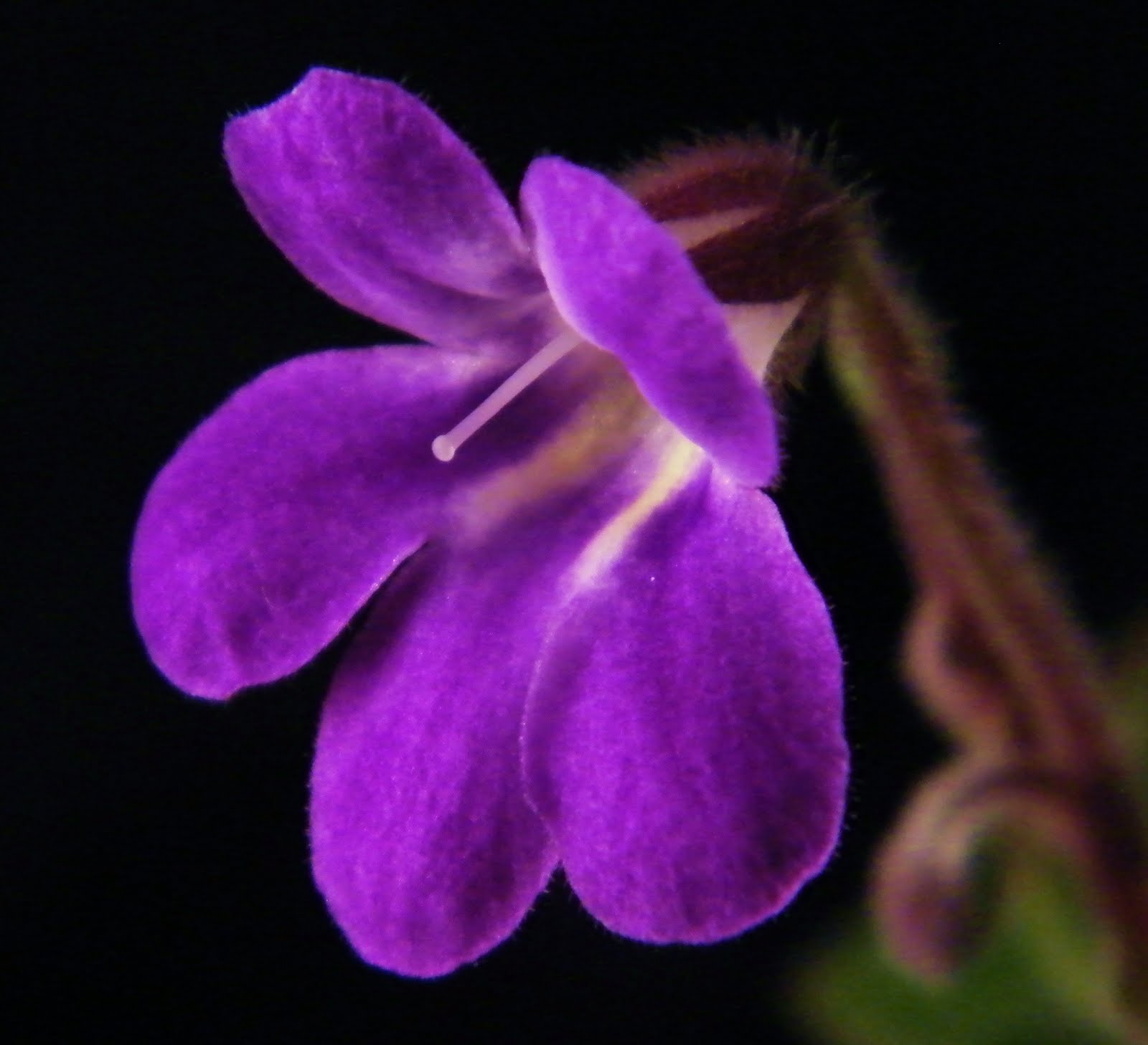
A close-up of a flower shows the ruffled texture of the flowers. The coloring in the photo is accurate and was taken in natural light.


This photo, from a previous blog post, shows P. 'Keystone's Bluejay' as a younger plant, when it won Second Best in Show and first place in New Hybrids' at the African Violet and Gesneriad Society of Western New York show last March in Buffalo, NY. I have been really happy with the performance of this hybrid. The extra effort was worth it!


Monday, November 1, 2010

Here they come!!!! The Year's Crop of New Hybrids Begin to Bud

"Take thy spade...it is thy pencil. Take thy seeds, thy plants...they are thy colors." William Mason


When it comes to artistic talents, as the quote above implies, I definitely have to rely on my little collection of plants to showcase my "creative" talents.... Assuming of course, that I have any talents. But, for reasons not fully understood, Petrocosmeas have finally decided to hybridize for me. After ten years of attempts and struggling to get even a single seedpod, or a single seed for that matter, the last few years have allowed me a bit of luck.

Last year, I harvested seeds from 14 different hybrid crosses. Of course, I don't have the space to grow them all, but I did plant a few, and the rest are stored in the freezer for another season. The cross which I am most excited about is shown below...P. forresttii x P. minor smooth leaf form.


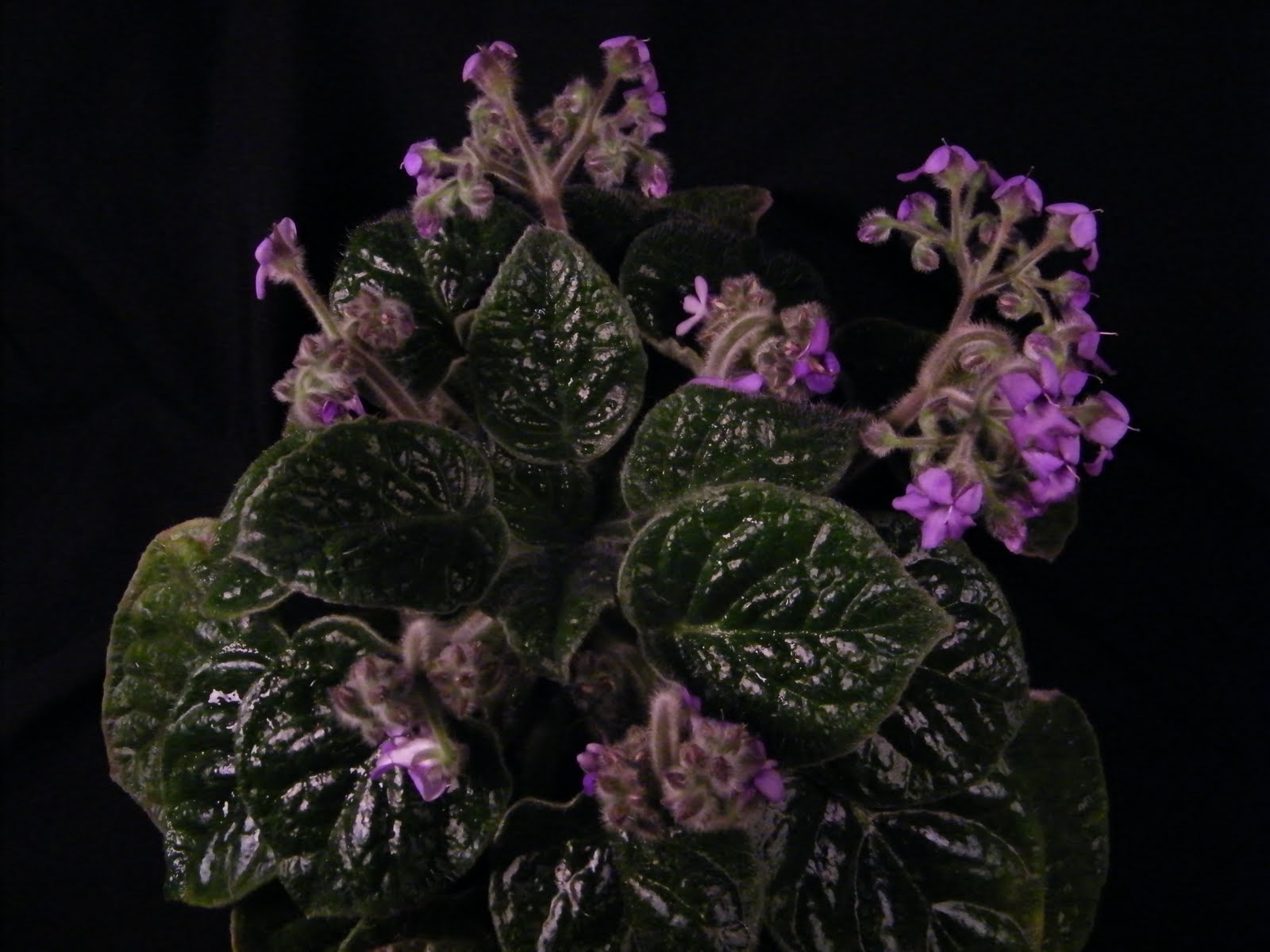
The largest, and first, of eleven plants from the cross to make buds! P. forresttii x P. minor smooth leaf form was a cross that I made with the goal of getting the round, glossy leaves of P. minor on a small, neat plant like forresttii. So far, the plants look a lot like P. forresttii, but the leaves are rounder, and that lovely glossiness of P. minor is certainly showing up in varying degrees among the seedlings. A couple show very little of it...and look much more like P. forresttii...but the majority do show the clear influence of P. minor in the leaves. Some are staying quite small, others growing larger. The largest, pictured above, is now 4.25 inches in diameter.


While the seedlings are showing great promise of meeting my goals for the foliar characteristics hoped for in this cross, the final test with this, as with ALL of the P. forrestii crosses so far is.... "will the inflorescences, or pedicels, be short and strong, like P. minor (lets hope!!!) or will they be long, wiry and untidy...as with P. forrestii ( boo, hiss, hiss...) . P. forrestii, unfortunately, has proven to be dominant with regard to the thin, wiry, messy, tangled pedicels. While I do like the individual flower characteristics of P. forrestii's flowers, I am clearly NOT a fan of the habit of those pedicels it produces. One last concern for this cross will be the flower count. P. forrestii can be quite easily flowered, and quite floriferous, while P. minor often can be a bit shy to produce a heavy bloom count. Thankfully, both of these species very rarely produce suckers, so that standard goal of my hybridizing program will hopefully not be an issue with these youngsters. Still, one of the joys of hybridizing for me has been....that....one never knows what the combination of genes from two gesneriads will produce.
I'll keep you posted!

Petrocosmea parryorum....an update....

"A garden is never so good as it will be next year." Thomas Jefferson


The quote above, by one of my favorite American Founding Fathers, reminds me of my experience in studying the genus Petrocosmea for the past few years now. And, P. parryorum is a prime example.

I posted a couple of months ago, how my original specimen of P. parryorum, which has spent a decade with me now, is still teaching me lessons and revealing its secrets with each new season. This year, it bloomed twice...once in January and again, starting what has been a very long and productive season of bloom in August. It continues to flower its last few remaining buds, three months later. That means that to date, this glorious species has been in flower for me nearly one half of the year! And, it is still going!

Pictured above, the now quite ragged and tired plant is still supporting the last few buds, remaining on the final 11 inflorescences. Here's the progress report so far.... it began with a rosette of leaves that was well over 14 inches in diameter when the first buds opened. Now, it has dropped the outer ring of leaves...likely due to the redirecting of energy into the flowers. It has produced 14 inflorescences, with as many as 57 buds on each inflorescence!!! Yes, that's correct...I removed one, pictured below, so that I could count the buds and also to preserve it in my private little "Petrocosmea herbarium" where I press and dry the various structures of each species Petrocosmea in my collection. SO, at around 50 buds each...I estimate that this plant has now produced around 500 flowers in one flowering season!!!! I've been amazed at this plant!
A dried Petrocosmea parryorum inflorescence. Some of the buds in this photo are underneath other buds, and a couple accidentally broke off, as can be seen on the left of the photo...but this one, and one other that I removed, each sported over 50 buds...the one above had 57, the other 54. I would surely love to get this influence incorporated into some Petrocosmea hybrids, but alas, I have not yet found a single flower on the plant that had pollen!! Attemps to pollinate it's flowers with other Petrocosmeas has resulted in no success. I have to wonder if the fact that it flowered during the late summer, when we were quite warm, might have affected the pollen production. I've consistently had better pollen production and better success with hybridizing in the middle of winter when temperatures were quite cold.... The flowering of this plant last January did produce pollen in the flowers.

A close up of a few of the current inflorescences on the plant above...showing a mix of spent flowers, open flowers, and a last few remaining buds.
I wonder what next year will reveal about P. parryorum...the Petrocosmea from India.


Sunday, October 31, 2010

Autumn, and Petrocosmea season begins!

"My green thumb came only as a result of the mistakes I made while learning to see things from the plants' point of view" H. Fred Ale


Petrocosmea flaccida 'ABG 1998-5551' a new clone of this old, dependable species.


Petrocosmea season always really gears up into full swing for me in the autumn. Those cool, damp nights make the cool-loving Petrocosmeas very happy. It always amazes me that even though they are growing indoors, under lights on timers, and all of this is done independent of the weather outdoors, the plants always "know"...they know what the climate outdoors is doing.

This year, I'm especially enjoying a darling little plant that I acquired about three years ago as a gift from a friend at the Atlanta Botanic Garden in Atlanta, Georgia.... A new collection of Petrocosmea flaccida. This clone was collected in 1998. I was delighted to get some "new blood" in the form of a new collection of Petrocosmea flaccida. I am growing, and have distributed this plant under the clonal designation 'ABG 1998-5551', which is the ABG's accession number.
I first wrote about this clone on this blog last year, when it flowered for me for the first time. Now, with another year of maturity, I've had the chance to watch how it performs when grown under identical conditions to my original P. flaccida, which I've had for years. I find this clone superior for a couple of reasons. First, it does not sucker nearly as much as the original clone. Those of you who follow my blog know how I dislike this pesky trait of some Pet species...so finding a clone which has less of a tendency to sucker is a positive characteristic in my opinion. Secondly, it shapes nicely and remains quite small....about half the size of it's larger sister, my original clone of P. flaccida. Leaves are quite small...more like the size of P. forrestii leaves. I would love to hybidize with this clone to see if it contributes to smaller Pet hybrids. I've tried several times to cross it with the original P. flaccida and to self it...without success. I think this may be due to the fact that both forms bloom early in the season...when it is still pretty warm...and I have much greater success with setting seedpods with the temperatures are much colder.

An overhead shot of P. flaccida 'ABG 1998-5551' shows what a lovely habit this form has. I have not trained it or removed suckers...and this is what it has done in it's second year of bloom from leaf cuttings. The diameter of the plant shown above is just under 4 inches diameter. This plant is potted in a three ounce shallow condiment cup where it has now remained for two years.


Wednesday, September 1, 2010

Petrocosmea parryorum....blooming NOW?!!??

"I look upon the pleasure we take from gardening as one of the most innocent delights of human life" Cicero........


One of the delights of working with plants is that one never knows what they will do..how they will perform. Just when we think we've figured out what triggers them to bloom or what they need to grow well, they fool us. I think this is my favorite trait of plants....they remain creations of nature and they remain governed by it, no matter what we as humans attempt to impose upon them.

And so it is also with Petrocosmeas and my love affair with them. Having proven and tested the hypothesis that they need cool and dry conditions to trigger bloom....my Petrocosmea parryorum has shown me clearly that I don't know anything....it is blooming for the second time in nine months and is putting up bloom at an amazingly profuse rate...at least for me.

Having grown P. parryorum for around ten years now, with no hint of bloom until three years ago, it is now blooming. The bloom is on my most mature plant..."the grandmother" of all my Pets....a plant that is at least 8 years old. We've had a hotter than normal summer here in southwestern Pennsylvania....with many days in the low 90's F. My basement has therefore also been warmer than usual. During my illness and hospitalizations back in May, the plant got quite dry, even wilted several times...once to the point that I feared I had lost it. You will note the browning on the older, larger leaves, and the "culture break" in the center leaves, which are noticeably smaller than the others. So perhaps that is what triggered this happy surprise of bloom?

Blooms on my 8 year old Petrocosmea parryorum, coming along in the heat of summer, and for the second bloom sequence in less than nine months....a happy, if not puzzling, surprise. The blooms on P. parryorum are clustered on a multi-branched pedicel...certainly one of the most "multifloral" of all Petrocosmea species..... Most produce one to five flowers per pedicel.

The multiflowered, silvery-haired, bud-packed pedicels of P. parryorum have a tight curl to them as they emerge from underneath the large leaves. I have counted 17 pedicels in total so far in this bloom cycle.


The "Grandmother" of my Petrocosmea collection, growing in the same five inch pan pot for many years now. I repot the plant every couple of years, removing some of the outer soil. replace it with fresh potting medium and reinsert it into the same pot. Here, you can see evidence of a "culture break" that occured last spring while I was ill. The plant wilted severely several times and with the resumption of good culture, has now produced a large, floriferous plant.


The same plant, pictured from above...note the younger pedicels underneath the leaves, still yet to emerge. This promises to produce a long and memorable bloom cycle for me to enjoy.
So this happy event proves that the more I learn, the less I know about Petrocosmea. Most species have only flowered once annually for me....which until now, I would have assumed P. parryorum to do also. P. parryorum has also only bloomed in winter for me previously...making this summer bloom cycle a bit puzzling. Was it the dry periods that triggered the bloom more than the cold? Is it related to the age of the plant in any way? Was it influenced by the size of the plant, and the mass of foliage, needed to support strong bloom??? Whatever the answer to the riddle, it now offers more questions for study..... but beyond all of that, it gives me pause to marvel and wonder, and thrill at Petrocosmea and Nature....... and isn't that really one of the reasons we garden anyway?


Monday, August 23, 2010

Happy Surprises... Petrocosmea 'Keystone's Whipporwill'

Every day brings a surprise for the grower and hybridizer of plants. Since the cultivation and hybridization of Petrocosmea is still in it's infancy, I'm finding this genus, my favorite gesneriad genus, especially thrilling. If you have never tried hybridizing, you really must. I promise you that if I can figure it out, anyone can. I have no training in this stuff....I just started with an interest, then a fascination, then, some might argue, an obsession. I read everything I could find on the genus, (and I could find very little to read, let me assure you.) But, mostly, I observed my plants, and tried, and failed, and tried again, and failed again (repeat this ten more times....). Then finally one day, it worked! So, pick a favorite gesneriad or two (I guess to hybridize one would need at least two...)...and try it! You'll be in for an incredible journey!

So, what was today's surprise? Well, my hybrid from last year, is flowering again, only five months after it's first flowering...and it is flowering in the summer! Why am I excited about this? Well, for one thing, it shows great promise of having a Petrocosmea that will flower more than once annually....it extends the number of days in a year when the plant will be in flower! And, it extends the flowering season into the summer months...a time when, for most of us, our Petrocosmea plants are not in flower. The hybrid, pictured above, is P. 'Keystone's Whipporwill'. The parentage is P.' Asa Blue' x begoniifolia.
P. 'Keystone's Whipporwill' in its second bloom.... gets better with age. The original plant, pictured above, is growing in a three inch diameter, one inch deep condiment cup...the type used in restaurants to serve sauces, etc. The center leaves are tight and puckered due to my choice to switch my fluorescent lights to T8 bulbs about three months ago...resulting in a great deal more light...many of the Pets don't care for it. I will be reducing the hours/day that the lights are on to make the plants happier. But, other than that, the plant has performed well. It grows easily, has not suckered, so far, and has attractive deep green foliage with a bronzy/purple cast and underside. Foliage is reminiscent of the P. begoniifolia parent, but more heart shaped, and a bit softer, like the P. 'Asa Blue' parent. P. 'Asa Blue' is a remake of the cross which produced 'Momo'...P. nervosa x flaccida. It flowers several times a year, and has a high flower count. This cross marked the first success at using a Petrocosmea hybrid as a parent. So these hybrids have three species in the background.
With maturity, the pedicels are producing three to five flowers each, on the average. Prior to taking the photo, I removed six spent blossoms. There are still lots of buds coming underneath the leaves. This promises to increase the bloom count and extend the flowering season.

The lighting in the photo doesn't clearly show the attractive bright yellow stripes in the throat of the flowers...but they are there. The blue in the photo is pretty accurate. Flowers have the shape of the begoniifolia parent, and this is also where the yellow comes from. Flowers are larger than either parent too. Plant size seems compact so far.


Another characteristic that I selected P. 'Keystone's Whipporwill' for was the attractive purple flower stems and calyces. I felt that since most Petrocosmea stems and calyces are green, this added another pleasing characteristic to the hybrid. I have distributed a few leaves to close friends for testing. Now, with further evaluation, I will begin to distribute the plant more widely...guess I'd better put some leaves down for myself too...for insurance. More than two years in the works, I'm happy with the result and consider the effort well worth it!