Monday, July 23, 2012

Summer's Treasures


Summer is not usually a big season for blooming Petrocosmeas, with most species being autumn and winter bloomers.  An advantage to having a larger and more diverse collection of Petrocosmea hybrids and species is that there are some which do flower in the summer.  For me, P. barbata, P. nervosa and P. parryorum have become reliable summer bloomers.  Hybrids incorporating these species also show a tendency to flower during the longer and warmer days of summer. 

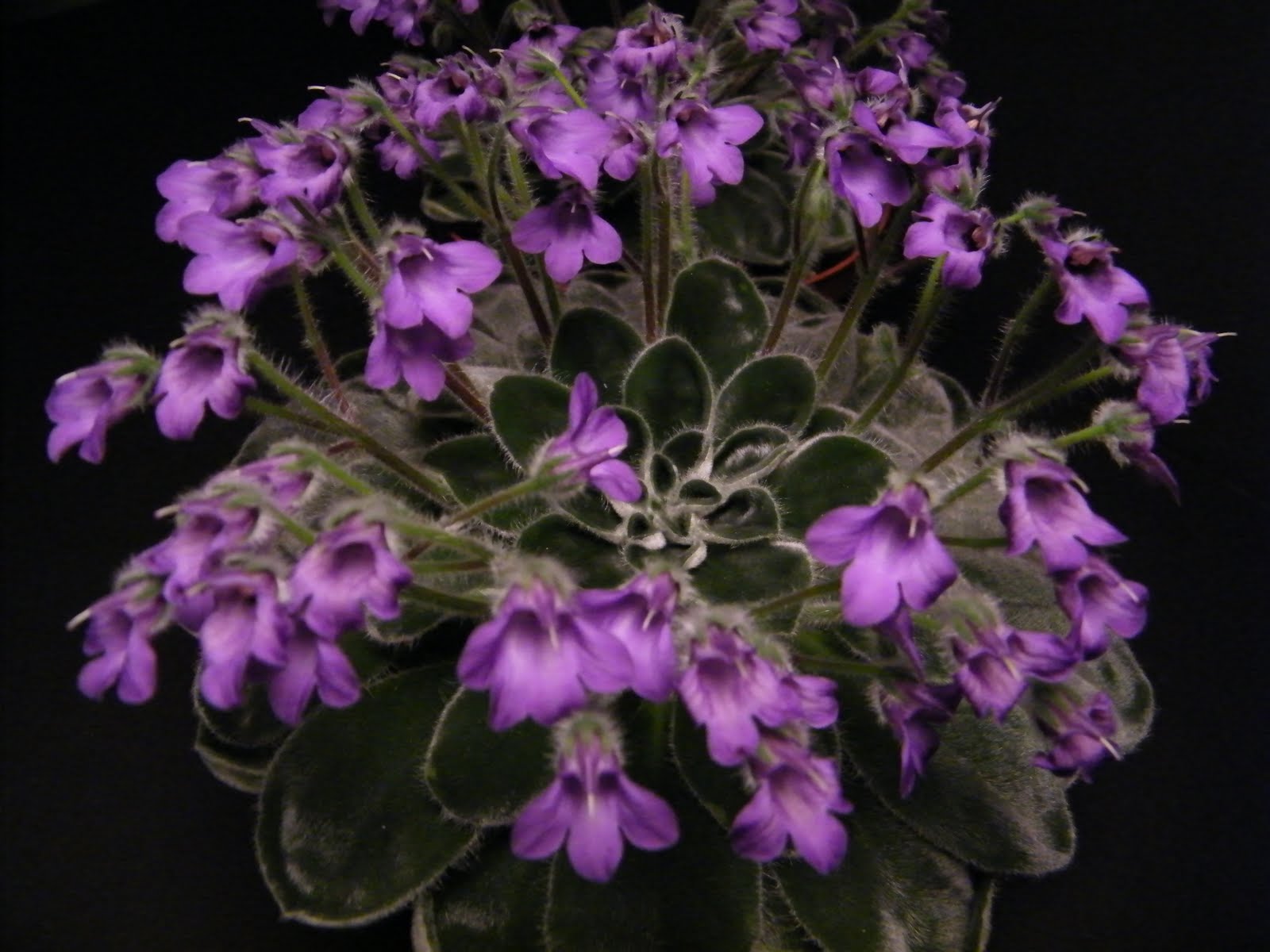
A few years ago, I was excited to add two new cultivars selected from a remake of the same cross that produced the old hybrid P. 'Momo'.  This time, Mr. Nakayama, who incidentally produced 'Momo', chose two cultivars that exhibited new and desirable qualities.  P. 'Asa Blue' was selected for it's tendency to produce tremendous quantities of large blue flowers.  Now, after growing this hybrid for several years, I can say that it clearly takes a few years for it to reach it's prime.  My original plant, pictured below, has finally shown it's potential for me.  The plant shown is currently putting on a spectacular show on the north facing window sill of my bedroom.  What a joy it has been to awaken to this joyous sight each morning for the past two weeks.  It shows no sign of fading and there are still lots of buds coming along.  Today, I counted 56  open flowers.  The plant has been growing in a five inch pan pot for the past four years, and has not been repotted.  I have grown it under lights, until two weeks ago, when I brought it to the windowsill so that I could enjoy the show more readily.  I advocate keeping Pets in the same pot for several years, and not over feeding.  I also believe that allowing the plants to get dry between waterings encourages more flowers.  Overfeeding and keeping plants constantly moist, at least for me, produces large leafy plants, but few flowers. 


P. 'Asa Blue' (above) in flower this morning on my north facing bedroom windowsill. 


P.' Asa Blue' also has been successful as a parent in one cross for me.  The photo below shows one of it's progeny...P. 'Keystone's Brilliant' (P. 'Asa Blue' x begoniifolia).  This cultivar was selected for the bicolored flowers with lots of white in the throat.  A nice yellow center also adds to the brilliance of these flowers.  My one plant of this hybrid is just now coming into flower.  It has always flowered in summer for me, making it another hybrid with potential as an "off season" bloomer among this genus which mostly flowers in the winter. 


                                              P. 'Keystone's Brilliant' just coming into flower.

As more and more hybrids are produced, hopefully, we will one day have Petrocosmeas in flower all year long.  For now, these few summer-blooming Pets are treasures in the long, hot days of summer. 

Monday, July 2, 2012

Hello friends!     It's been a while since I've posted to the blog.  I have not been stagnant, however.  Thanks to all of those who have written.  I've gotten lots of emails on Petrocosmea-related topics, and many have asked about various aspects of Petrocosmea culture.  I've decided to use those questions as a guide for future posts, since those of you who have written have often mentioned that you know of others who are having similar questions.  The support for this blog is overwhelming.  I never envisioned it being as popular as it has become.  The level of interest in Pets has grown over the last few years and continues to grow from what you are telling me.  So, I decided to kick of the new posts with this one which is basically just an update on what my Pets and I have been up to.  

First, something fun!   Below is a photo of my newest seedling to flower.  I am very excited that it is flowering now, in summer, a time when most Pets are in active growth here in southwestern Pennsylvania, where for a couple of weeks now we've been having a record-setting heatwave and drought.   Why does that excite me?  Well as a hybridizer, one of my goals is to extend the blooming season for the normally strongly seasonal winter flowering genus.  Most Pets for me flower between October and March.  Having a seedling flower now gives me hope that it might provide a plant that will flower both in summer and winter, thereby extending the season of the Pets for the home grower and for summer shows.  The second exciting thing about my new baby is that the flower is white!  Bright, sparkling, purest white with a sunny yellow center!   The cross is P. forrestii x begoniifolia.  P. begoniifolia often flowers in summer, so I'm sure that is where the bloom time for this seedling comes from.  It also is a white seedling of a cross where one parent is lavendar (P. forresttii), so that means that P. begoniifolia may be dominate for color over P. forrestii.  This is only my second hybrid seedling that has ever had white flowers.... the other P. 'Keystone's Bantam' was a white seedling from among nearly forty siblings all of which were purple or lavendar.  It will be fun to see how this current seedlings' siblings flower. 

The first seedling to flower from P. forrestii x begoniifolia is pure white!!  No sign of the lavendar flowers which it's maternal parent has.  Will the other seedlings in the cross also be white?  Time will tell............

I'm growing out 13 seedlings from this cross....all that were produced.  Few seeds were produced, and only these 13 germinated.  The seedlings germinated last January and are now six months old.  Only one has flowered.  None of the other are showing buds.  Foliage is more like P. forrestii, but with the rounder shape and deep bubbly veining of P. begoniifolia.  I had hoped for some of the burgundy purple undersides to the leaves from P. begoniifolia, but so far, none are showing that characteristic.  I would love to self and sib cross some of these to see what happens to flower color and foliage in the F2, but often Pet hybrids have been reluctant to produce pollen for me.  Of all my crosses, this is the one I would most like to sib cross to get an F2 generation. 

The tray of P. forrestii x begoniifolia seedlings. The dark green foliage makes the white flowers of the first seedling to flower really stand out!   I will soon have to seperate them and give them more room.  They are going to be more like the P. begoniifolia as far as plant size goes, it appears.  Some are producing lots of offsets (which I detest in hybrid seedlings).  I often select against offset production in seedlings...so once they flower, unless the flowers are truly spectacular, those will likely go into the garbage bin. 


So, that's the most exciting thing in the Pet Cave right now.  I look forward to getting back to the blog and "talking Petrocosmeas" with you again.  ~ Tim

Tuesday, November 29, 2011

Petrocosmeas (and this blog!!!) in the News!!

Finally!!! Petrocosmeas are in the news and getting the attention we all knew they deserved! I was delighted by an article in the RHS publication "The Plantsman" back in September that announced a new name for one of our most popular Pet species...the former Petrocosmea rosettifolia. The new, and proper name for this plant is Petrocosmea cryptica as described and published by Julian Shaw of the RHS. I am attaching a link to the article here:
www.rhs.org.uk/Plants/RHS-Publications/Journals/The-Plantsman/2011-Issues/September/Petrocosmea


Petrocosmea cryptica '#3' (formerly known as P. rosettifolia #3) shown above. There are several variants or clones of this species in cultivation. The one above has attractive leaf markings and large, pure white flowers with yellow throats.


Mr. Shaw finally did some of the much-needed taxonomic work on one of the more popular species in cultivation now for around ten years. In his article, Mr. Shaw mentions the fact that this species has been improperly labeled P. rosettifolia, and has also been distributed under various other names such as 'G25KC00' which I've discussed here in previous posts. In my collection, I've accumulated at least nine plants which I believe are simply different clones, likely from different collections, of this species. DNA analysis which we did with Niagara University, has shown that these various clones are all very closely related genetically, so close, in fact, that we believe they are all the same species. It is common from a species to contain individuals with quite different characteristics.

Pictured above is a plant in my collection which I call P. cryptica '#5 '(formerly labeled P. rosettifolia #5). This form has less distinct yellow veining in the leaves and lavendar flowers.


Pictured above is P. cryptica '#4' (formerly labeled P. rosettifolia '#4'). This form has white flowers and a distinct and vibrant yellow veining to the leaves. The flower form on this clone, to me, is less attractive than that of #3, but it tends to flower more heavily, and later than '#3'.


The photo above shows the variability in the foliage of P. cryptica clones in cultivation. This photo shows my plants of P. cryptica '#4' at the top and P. cryptica '#1' at the bottom. Two forms #1 and #2 both have leaves that are nearly totally green and more rounded in shape with smooth margins. Other clones show the distinct yellow veining and toothed leaf margins. Clones #1 and #2 also grow much more compact and have flowers in light lavendar to pink shades. DNA analysis, though, does show them to be the same species as the showier forms.


Mr. Shaw's article has lots of good information in it. And, it mentions this blog and three of my hybrids using P. cryptica - P. 'Rosemary Platz', P. 'Keystone's Bantam', and P. 'Keystone's Harvest Moon'. The first two are registered with the Gesneriad Society and show P. rosettifolia as the parent, since that was the name applied to the species at the time.


In the future, I hope to see more taxonomic work done on the many Pet species still being grown and distributed under names that are clearly incorrectly applied. P. minor and it's various forms being one in this group. P. sericea and sp.' HT-2' are also suspect in my opinion.


So, the question I am getting is "Should I change the labels on my plants?". I have changed my labels on the plants which I am reasonably certain fall under this newly published description. If I am in doubt, however, I say what I always say...keep the plant labeled as you acquired it, along with a notation of where and when you acquired it. One day, perhaps we will have the mess with Pet names sorted out. For the time being, though, enjoy growing the plants as they are.


A Sincere "Thank You"

Petrocosmea sericea, in my plant room this morning!


I've missed blogging about my favorite plants। Sometimes, one is blessed with lots of "passions" in life, and priorities must shift. With only twenty-four hours in a day, and only one of me, the time left for plant passions is limited to only enough time for watering and maybe a little fertilizing and repotting. I'm happy to say, though, that at least for the moment, I'm finding a bit more time to not only water and fertilize, but also to stop and smell the Petrocosmeas (see my last post!!).

Most importantly, I must stop to say a most sincere "Thank you" to all of you who have taken the time to write, share photos, seek advice, and tell me of your experiences with Petrocosmea. It means a lot to hear that you have found the posts here on the blog helpful to your enjoyment of Pets. In the time that I have been away from the blog, I have continued, as time permitted, to do some experiments, study both old and new species, and to continue to grow and evaluate new seedlings for future release. I continue to learn so much about these plants every time I work with them. The feeding, watering and fertilizing may have been scarce, but my enthusiasm for the Pets remains. In your letters, you have given me many ideas for future posts, and I will do my best to get to those as soon as I can. Thank you for the suggestions, comments, and questions.

So, this morning, having a rare day off, I arose early and went to the basement to work with the plants. I was welcomed by the plant pictured above...Petrocosmea sericea, giving it's annual show of bloom. The plant pictured is now about ten years old. It was one of my earliest acquisitions as a gift of two leaves from a friend. This senior amoung my collection has been in the same pot for about four years now. It is potted in a 1:1:1 ratio mix of peat, perlite and vermiculite and is in a five inch pan pot. It sits on an acylic matting that is occasionally moistened for humidity. Humidity in my basement never gets below around 50% year round, and is often higher. This summer, as my work schedule has gotten busier, this plant has wilted several times and has only been fertilized maybe twice in the last year. But it is happy. This photo reasserts my advocacy of letting Pets dry out between waterings, and for going light on the fertilizer. One of the most common questions I get is "why won't my Pet bloom?" Often, with some questioning, I hear that the plants are kept constantly moist and fertilized often. It is true that his treatment makes lovely and lush foliage, but I fear it is at the expense of flowers. Pets in nature often grow in rather harsh conditions where they dry out between rains. Prior to taking the photo, I removed 17 spent flowers and there are 68 flowers still on the plant, if I counted them correctly. It makes a lovely sight and you can see the flower potential if given proper culture. SO, this morning, being greeted by this lovely sight, I took the time to stop and smell the Petrocosmeas! (I have three of these P. sericeas in bloom now.) And remember, this species is fragrant.... the scent is great! I hope you have some Pets in bloom to enjoy too~!!

Sunday, July 24, 2011

Petrocosmeas with Fragrance

I've posted about this before, but wanted to remind those of you who are growing P. minor or P. sericea, or P. sp. 'HT-2' to sniff the flowers when they bloom for you. This year, in the GS Convention show, Paul Kroll entered a flowering P. minor. This was an unusual entry since P. minor rarely blooms at this time of year. I used this opportunity one morning in the showroom to conduct an informal survey with those who were viewing the show.

I asked ten people to sniff the flowers of the P. minor. Seven of the ten people could detect the fragrance. It was mid-afternoon, and for me, the flowers are most fragrant very early in the morning, but still the fragrance was there. Of those who could smell the fragrance, I asked them to describe it. All said "spicy", four also detected a floral scent along with the spice.... two said it reminded them of carnations. Three people could not detect the scent at all. I find that for many of the gesneriads that have fragrant flowers, there are always a good percentage of people who cannot detect fragrance. Covering or enclosing the blooming Petrocosmea will also help to concentrate the fragrance. I also feel that some clones are more fragrant than others. The veined leaf form of P. minor, the one often labeled P. sp. #5 is the most fragrant.

So, just a reminder to take the opportunity to enjoy yet one more incredible trait of these fabulous gesneriads!! SO take the time to "stop and smell the ....Pets!"


Petrocosmea minor Kinship group


This year, I entered my first Petrocosmea Kinship Collection in the Gesneriad Society Convention show. A Kinship group is an effective way to showcase a parent and its offspring. Dominant characteristics can easily be illustrated with this type of entry, as well as utilizing the entry to introduce new hybrids.

I chose to showcase Petrocosmea minor and four of its hybrid offspring since P. minor has been quite the challenge to hybridize with. It has never performed successfully for me as a seed parent, and has only functioned as a pollen parent in three crosses so far. I must have pollinated a hundred flowers, actually likely more than that. Last year, I think I applied pollen to every P. minor flower that opened, all failures. The crosses that have worked have been P. minor crossed onto P. forresttii, P. sericea, and P. rosettifolia. The cross with P. sericea, which like P. minor has fragrant flowers, also produced fragrant offspring.


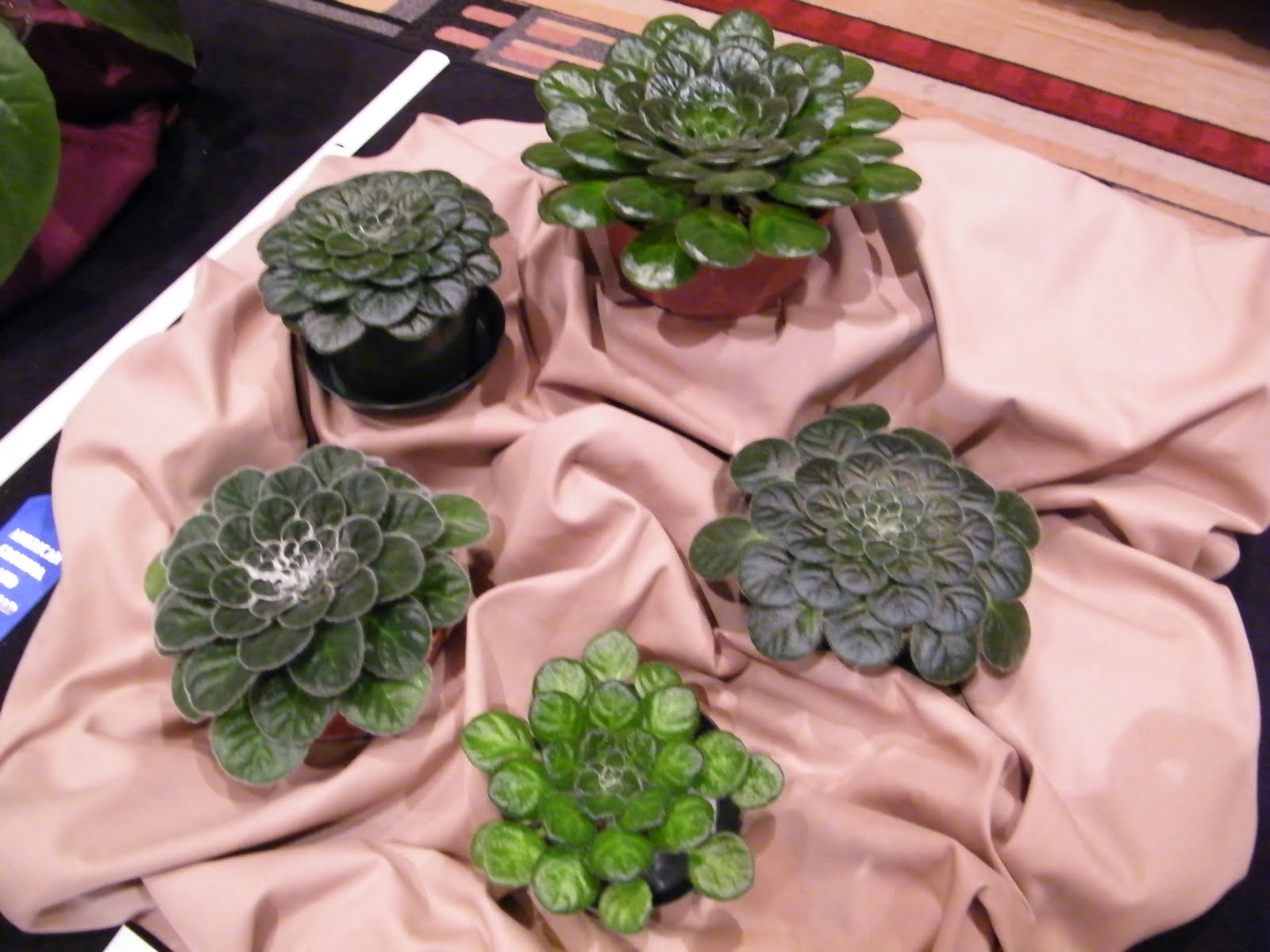
Pictured above is my Petrocosmea minor Kinship Collection. Starting with P. minor at the top, and moving clockwise, there is P. 'Paul Kroll', an unnamed seedling of P. rosettifolia x minor, P. 'Keystone's Blue Jay', and P. 'Keystone's Slippery Rock'. I used tan fabric as a unifying drape for the collection since I like the brown tones against the green Pets....


Pictured above is a new hybrid P. 'Keystone's Slippery Rock' which is P. forresttii x minor. This cultivar had lots of flowers and inherited a nice compact rosette from P. forresttii and the shiny round leaves of P. minor. It was my favorite seedling from the cross. Slippery Rock is a city about an hours drive north of my home in Pittsburgh, in western Pennsylvania. The glossiness of the leaves reminded me of a slippery quality, so the name was to honor a great university town in PA.

Pictured above is P. 'Paul Kroll' a sibling from the P. forresttii x minor cross that produced P. 'Keystone's Slippery Rock'. This plant has flatter leaves with more prominent veining, a dark green round leaf with a bluish coloration and a nice combination of glossiness and hairness to the leaves. It was the most floriferous plant from the cross, producing LOTS of flowers. You've heard me mention my friend Paul on here before. Paul is a skilled grower of Pets and has shared lots of new Petrocosmeas with me over the years, so I wanted to honor him with this new hybrid.

The Kinship group got lots of positive comments and received a first place ribbon from the judges. I had lots of requests for leaves of the new hybrids, so I hope they will be enjoyed by other admirers of Pets soon.


Sunday, July 17, 2011

Petrocosmeas Go To Convention!!!


Well, the annual international convention of the Gesneriad Society is but a fond memory now, but what a great time we had! Philadelphia was the site for this years convention and the fast-paced week was full of fun, friends, and of course gesneriads! While I do love the plants, I always leave convention reaffirming that the chance to spend a week among friends who also love gesneriads is the best part, and this year was no exception. On the Petrocosmea front, Pets got their fair share of attention. I was overjoyed to see some of my own hybrids being grown and shown by others....a "high" that every hybridizer enjoys.


Petrocosmea 'Keystone's Bantam' won big this year and was selected 'Best Petrocosmea'. The plant was grown and shown by Richard and Nancy Carr of Ohio. An interesting story about this entry was that the classification committee almost didn't let Richard and Nancy show the plant as 'Keystone's Bantam', insisting that it was actually P. rosettifolia. I was asked to come over and help to sort out the confusion, which we did. The Classification Committee were simply unfamiliar with the characteristics of the hybrid, and honestly thought they were helping the exhibitor to correct some mislabeling. The distinction, when out of bloom, is that 'Keystone's Bantam' is significantly smaller in leaf and rosette size and a bit hairier than the species P. rosettifolia. A P. rosettifolia with that much leaf volume to the rosette would have been three times the size of the little plant that the Carr's were attempting to enter. The confusion was quickly cleared and the plant was entered. It did well in the judging too! I was as proud as the Carrs were, I think!


P. 'Keystone's Bantam' also showed up in the Photography classes, and performed well there too! Dale Martens did a very skilled job of photographing her little plant early one morning just as the sun was rising and casting a golden glow upon the little plant. She captured this in the photo and the judges recognized her skill by awarding her a First Place in the class and 'Best Photograph' for the Division. Dale, a dear friend of mine and my hybridizing mentor, kindly gave me the photograph after the show! I was touched by her generosity and the photo now hangs in a prominent place in my living room.


Mary Lou Robbins won a second place award for her needlework interpretation of a photograph from this blog, taken of my hybrid seedling P. forrestii x sericea. Mary Lou wrote some time ago asking for permission to use the photo in a craft entry, and this is the result. I loved it! She even used longer tufts of thread over the calyx lobes to mimic the hairiness of this hybrid. It was a First Place effort in my book Mary Lou!!!


Another friend, Paul Kroll, executed a wonderful design using a Petrocosmea sericea as a focal point in his design. The theme was Punxy Phil, the legendary ground hog from Punxsatauney, PA, who emerges each February 2nd to predict the arrival of spring according to whether or not he sees his shadow. This design required that hairy and fuzzy gesneriads had to be incorporated into the design. I loved this one! The pieces of slate at the base were intended to suggest Phil's shadow.


This photo, taken on the last evening of convention shows some of my dear friends and mentors in my gesneriad adventures. From the top left are Dr. Bill Price, Mary Lou Robbins, Ben Paternoster, myself. Middle row L to R are: Paul Kroll and Arleen Dewell. Front row L to R are: the legendary and beautiful Rosemary Platz, namesake of my first Petrocosmea hybrid, Karyn Cichocki, Dale Martens, and Jill Fischer. We enjoyed a wonderful dinner on our last evening together. Each of these people has taught me something about gesneriads over the years that I have known them. In all things in life, having mentors and friends is most important to success. I have been most fortunate to have lots of both. I wish the same for each of you.........


Saturday, June 4, 2011

New Pets From the Netherlands - Foederer Hybrids

I just love this photo.... it is a photo shared with me by Jeff Foederer of P. sericea growing and blooming outdoors in Jeff's garden in the Netherlands. I've had the pleasure of corresponding with Jeff a few times and am currently growing one of his beautiful xBrigandra hybrids 'Ivory Falcon'. Jeff also produces some spectacular Petrocosmea hybrids, which I thought I'd tell you about.


Jeff was the first person to register Petrocosmea hybrids with the Gesneriad Society when he registered P. 'Lexi' back in 2006, followed by P. 'Milan' in 2007. Recently I received a photo in an email from Dale Martens, asking me to take a look at Jeff's most recent hybrid P. 'Helena' (pictured below). Just take a look at the flower count on that one!!!!! Magnificent!!

Jeff's hybrid, P. 'Helena' is a cross between P. menglienensis and P. nervosa. I can see the nervosa parent in the foliage and the menglienensis parent in the flowers. What a beautiful plant. 'Helena' was registered in 2010.

P. 'Milan' (begoniifolia x nervosa) is another beautiful plant. The flowers seem to dance like butterflies above the foliage. P. 'Milan' was named for Jeff's grandson, I believe.


Jeff's hybrid P. 'Lexi' (barbata x flaccida) is a small grower, looking much like P. barbata in habit, but then the lovely blue flowers emerge and it is clearly not P. barbata. I'm happy to say that I've grown this one for a couple of years now and really enjoy it. It too was named for one of Jeff's grandsons. This represented the first use of P. barbata in hybridizing.

Ornamental Value - Judging Petrocosmea Out of Bloom

WARNING: I'm going to offer an opinion in this post that you may find objectionable.... reader discretion is advised.

Please take a look at the photo below and notice two things.... First, notice the number of entries. This is the "Grown for Foliage" class for Petrocosmea at the 2009 Gesneriad Society Annual Convention Show in Silver Springs, MD. The intent of this class is to provide a place to enter those nonflowering gesneriads that possess significant ornamental value for the parts of the plant other than the flowers, such as foliage, stems, calyces, etc. There were around 30 entries in this class. It was subdivided into about five or six smaller classes due to the large number of entries. Secondly, and perhaps more importantly, take an objective look at the entries on the table and ask yourself if there is anything particularly ornamental about them. Granted you cannot see them well due to the distance of the photograph from the individual entries, but is that anything about them that makes you say "wow" what a striking plant?


As a keen admirer of Petrocosmea, when I first viewed this section of the show, I said, "wow" but that was due to the number of entries. However, once I got past that, as I looked at them, I had to ask, "why are all of these entered into the foliage class of the show?" Now, remember, those plants entered out-of-bloom for judging are intended to possess some particularly ornamental quality about the foliage or the plant habit that is ornamental. At this point in the argument, people usually challenge me by saying that "Petrocosmea has an ornamental growth habit to the foliage". Granted, many of the Pet species do have a pleasing foliage habit. That flat, symmetrical, spiraled pattern to the foliage rosette is attractive, and has some ornamental value. Notice I said "some". But, many Pet species do not have this...kerrii, barbata, nervosa, often flaccida and parryorum are not particularly pleasing as they want to grow. But, others like forrestii and minor just "do that"...they generally, without any intervention from the grow, just naturally form and near-perfect rosette. But what else is there to make them ornamental...and by this I mean ornamental ENOUGH to rise to the level of a first class show specimen? I say, not much else is there in most cases. The fact is, in my opinion, in most cases the average Pet, when out of bloom is just a plain green plant. Consider other plants that do this...Sempervivum, Aeonium, Haworthia, many Primula, Bromeliads, and even many Saintpaulia hybrids do this....but do we see them on show tables entered when they are out of bloom? Usually, No if the leaves are plain green with no other coloring, variegation, etc. Why don't we see these other plants entered when out of bloom? Because they are not showy enough to win awards if they are not in flower.
Consider this blue ribbon and Best In Class winner above...P. forresttii. Other than the form of the rosette, is there anything particularly ornamental about this plant? It won these high awards based on the ornamental value of the foliage in large part..... Should it have? Do any of us believe that the grower here likely had to exert any great effort to get the plant to achieve this shape and symmetry? Probably not....P. forrestii just grows that way without any intervention.
Another first place winner above...P. barbata. Anything striking about the foliage on this one? It is a lovely little P. barbata...... but is it ornamental enough to get such a high score?


So then, why are these plants getting such high awards and why are we seeing so many of them entered for Ornamental value in shows? My thoughts are that we are still getting over the "new and rare" effect that we so often feel and see when new species and hybrids are introduced. Most Pet species in cultivation in the USA and Canada right now have only arrived within the last decade or so. Prior to that we grew P. parryorum, P. flaccida, P. nervosa and P. kerrii. P. formosa came along around 1998. Then in the years following that we had P. forrestii, P. minor, sericea, rosettifolia, etc, etc. So for many growers we're still infatuated with the "new-ness" of these plants. Yes, they are charming, and interesting ,and new, and rare, but are they strongly "ornamental" when not in bloom and when you exclude those factors? No... in most cases it's a plain green leaf...sometimes with a bit of silvery hairiness, or a curled leaf margin, or a bit of yellow central veining as in some of the rosettifolia clones, but do they rise to the level of Episcia 'Cleopatra' or Pearcea hypocyrtiflora, Gasteranthus atratus, or Smithiantha cinnabarina? THOSE are the plants the ornamental foliage classes were intended to accommodate in shows... plants that you can spot from across the room due to the striking foliage.

Lets consider, though, that I am being a bit harsh, and lets accept the argument that it is the foliar rosette, and that flat, perfectly symmetrical form and habit to the growth pattern that IS the ornamental quality which makes a Petrocosmea ornamental when out of bloom. Okay, lets explore that. Granted, the public often approaches a Petrocosmea in a showroom and says "WOW, look at that!... Look at how perfect it is!" I've spent a great deal of time standing near the Petrocosmea section in a showroom with the sole purpose of observing and studying the public's reaction to my favorite genus. I've seen and heard this reaction many times. So, in fairness, yes, there is something quite ornamental about the form or habit of the plant itself. If we are then to accept and make room for this , then certainly one should expect near perfection in this regard for the blue ribbon Pet entries. But we're not seeing that. Think back to the last few shows you've attended or photos you've seen of award winning Pets that were out of bloom.... were those plants on the table the best of the best with regard to form, symmetry, even pleasing shape and habit? Were they mature plants in all cases? To rise to the level of a show specimen, they should exhibit evidence of maturity, careful and consistent care, shaping, training and grooming. Given the ease with which most Pets naturally shape-up as they mature, judges should be requiring a first place winner to be perfection in most every regard. The form of the rosette should be a perfect circle without gaps in the leaf pattern.


Take a look at this first place winner above... P. menglienensis. It appears to be little more than a starter plant, with a rosette that is weak and open, and asymmetrical. There are gaps and it certainly is not a perfect circle. Leaves are really pretty much plain green leaves. Why a blue ribbon? Giving such a plant a blue ribbon does not do the exhibitor or the public any favors. There is often the argument to "be kind" in judging and just reward the effort to bring it in for the show. Huh? Awarding such entries high awards misrepresents that standard and potential for the plant, as well as misrepresenting the basis of the whole judging process. That does no one a favor. Better to take such an opportunity to educate the exhibitor and the public. That is the duty of the judges in such a situation...education. This is a healthy, young plant, with great potential to become a large, attractive flowering plant which will demonstrate the true potential of this beautiful species. But, P. menglienensis is a plant that most likely will always perform best as a show specimen when in bloom..... it possesses nothing particularly ornamental when out of bloom, whether large or small.


So, there it is. The opinion of someone who has spent a lot of time over the past few years learning about, and growing to love the genus Petrocosmea. I grow them, I bloom them, I hybridize them, and yes, I even fail with them. I also judge them as a master judge for the Gesneriad Society and I DO exhibit them.... Almost without exception, I enter them as either a "New Species" when that is the case, or as "New Hybrids". Perhaps I'll enter them as a collection to show the variation within the genus. They certainly are excellent plants for educational exhibits because we are learning so much about them everyday.. BUT, I am very hesitant to enter them when out of bloom for ornamental value. I simply feel as a judge, exhibitor, hybridizer, and most importantly, as their greatest admirer, even at their best, they lack significant ornamental value if they are not blooming. My purpose in this post is to begin to spark thought and consideration on the part of exhibitors and judges about the current manner with which we treat these entries in shows. I feel that the standard for awarding non-flowering Petrocosmea entries should be re-evaluated. It is kinder and fairer of the judges to educate than to give awards that lack substance. Now, I'm going to go and water my Petrocosmeas......


Wednesday, June 1, 2011

Stolons, Zippers and Buttons


Most of what we know about cultivating Petrocosmea is still pretty new information. Many, or rather most, of the species we are growing now only arrived on our plant stands and show tables within the last decade. As we are growing them more, and our time spent with these plants is increasing, we're seeing for the first time in many cases, just what sort of peculiarities these wonderful Pets are capable of. Zippers, buttons and stolons are just three of the manifestations my Pets have produced in the last few years. Since these may be new to growers, exhibitors and judges of Petrocosmea, I thought I would discuss them in a short post.


Buttons ~~~

The photo above is Dale Martens' photo of a "button" that appeared on her plant of my hybrid 'Keystone's Bantam'. There was a recently lengthy discussion on this phenomenon on Gesneriphiles, when a plant exhibited with such a button was marked down in judging . The judges, who were all expert and seasoned judged, had not encountered this anomaly before. One of them contacted me to ask if Pets "normally" did this. I've seen several plants of P. rosettifolia do this during the winter when I was resting them by keeping them drier than usual and cool. 'Keystone's Bantam' does this often, and since it is hybrid of P. rosettifolia, I suspect it inherited this trait from it's rosettifolia parent. I have also seen this once on P. forresttii.
In all cases, the plant produced a new whorl of leaves from the center of the "button" and the plant regained full and attractive symmetry within the rosette with the next cycle of growth.

Above is my photo of 'Keystone's Bantam' at it's first flowering. You can see the center button in the photo. The button appears to be a dense tuft of golden yellow hairs and does not represent poor culture or a rotted or diseased center. It appears to be a normal, although not that common feature of these plants. It is my opinion as a grower and judge that it should not be faulted or penalized in judging unless in the opinion of the judges, it detracts from the overall ornamental value of the plant. But, that's just my opinion...and opinions are like noses....everybody has one.


Zippers ~~~


The next phenomenon in Petrocosmea growth patterns is what I call zippering or zippers. A healthy plant, usually with a few years of age, suddenly starts to produce a center growth point within the crown of the rosette, that begins elongate into a linear growth point. The normally circular rosette can often become more oval in shape, and if grown on, the plant often splits into two or three crowns. Eventually these will totally split or separate producing two or three new crowns. I see this occur often in P. forrestii, and it's hybrids, as well as the rosettifolias and their hybrids. I have seen it occur once in P. minor also. In all cases the plants were three years old or more when this happened. See the photo below of P. forresttii at five years of age, with a zippered crown, which eventually became three separate crowns. The plant flowered very heavily during this period. It appears to me to be more a factor of age that a cultural flaw.


P. forrestii with a zippered crown.


Look closely at the plant in the center of the row on the left above....the one with the yellow ribbon. This photo shows a group of P. 'Short'nin' Bread' entries at a convention show a couple of years ago. The third place winner was a plant with a zippered crown..... it beat out some other specimens with more typical round crowns. This judges, in this case, did not penalize this plant for the zippered crown..... which again, they should not do unless it detracts from the ornamental value of the entry. Good judging in this case...as it demonstrates a panel of judges who were familiar with the habits of these plants. (P. 'Short'nin' Bread' is a P. forrestii hybrid...so it likely got this trait from its forrestii parentage.)


Stolons ~~~


Stolons are yet another trait of healthy Petrocosmeas which we are seeing from time to time. I've seen it on several species and hybrids....so it appears to be possible on just about any Petrocosmea. I have not identified what might be triggering it other than the plant deciding that it wants to make some stolons.... I find it a "cute" phenomenon on most Pets.

Congratulations to B. J. Ohme of Perfect Petals for his first place winning entry of P. 'Short'nin' Bread' at the recent AVSA convention in Cherry Hill, NJ. Wisely, the judges recognized the additional ornamental interest that the stolons provided to this entry and gave B.J. his blue ribbon. P. 'Short'nin' Bread' is a plant that, in my opinion, is most ornamental when shown in bloom. But traits such as stolons can add ornamental interest. (Photo courtesy of Dale Martens..... "thanks, Dale!!!!!" )


So, there they are, the quirks that our Pets are capable of conjuring up to keep us fascinated and infatuated with them. These may be just the beginning of the wonders we will unlock as we enter into a new era of hybridizing with this genus.

Monday, May 30, 2011

Lost and Found - A Tiny Surprise

One of the first lessons I learned as a budding gesneriad grower was that the first thing one should do when acquiring a prize new gesneriad is SHARE IT! At the very least, propagate it and then share it. Why? Often, events in our lives can get in the way of the care of our gesneriads, or they simply may not like the care we have to offer them, and they die. But, fear not, if we've followed the first rule of growing gesneriads, and we've shared our prize plant, we often can get it back from the friend with whom we've shared it. That has happened to me more times than I care to remember, and recently I was reminded of how true that rule can be.

The story begins a couple of years ago when I wanted to test whether the "miniature" gene that has shown up in my hybrid 'Keystone's Bantam' would be passed along to its offspring. So, I crossed P. forresttii with pollen from 'Keystone's Bantam'. I used forresttii because it was the smallest of all the species I had grown at that time. A seedpod did indeed result, and sure enough, as those zillions of tiny seedlings began to mature, it was evident that something unusual was going on. They were all not only mini's but microminiatures.... the leaves remained the size of a sesame seed on all of them! I thought that was "too miniature" and that they were stunted. So, I repotted them... and began to fertilize them. They were all healthy, but just very tiny. After about a year and a half, I decided they were rejects and tossed them all out. But, I gave a couple of them to a friend who is known for growing spectacular, prize winning Petrocosmeas. I had forgotten all about them until recently when I was visiting that friend. We were making a Sunday morning sweep of the plant room when I happened to notice among the Pets, a tiny little plant. I picked it up and saw the label.... There it was, my tiny little Petrocosmea hybrid...still tiny! See the picture below, with the little plant beside a quarter for comparison. ...........


The plant was growing in a one inch pot, but appeared healthy and thriving....and under two inches in diameter. It is now almost three years old and it remains very small, with lots of tiny leaves in a neat little rosette. So far, it has never bloomed.

My tiny little hybrid Petrocosmea, sitting beside a standard P. sericea. Each of those little squares on the grid is 1 cm x 1 cm. This little guy proves the value of sharing plants AND the value of not being too hasty to make judgements about new hybrids that show new and unusual traits.

The genetics that are showing up within the genus Petrocosmea, as I am getting to grow out more and more crosses are amazing me! Who'd have ever guessed that mini Pets would have shown up so early in this adventure? The variation in flower coloration and extra petal lobes, ruffles, etc is also a wonder to see. I counted around fifty seedlings this morning in the Pet Cave that are yet to flower for the first time...and these from five different new crosses. My excitement with these seedlings in continually renewed.

A happy ending.........I'm delighted to say that my friend shared a dozen or so little leaves from the plant, and they are already forming tiny little babies in my prop box. Now, if I can just grow them on ....and see if they remain minis. I also still have a good supply of the seeds from that original cross in the freezer, so I'll be planting them again this winter. Lesson learned....again?!

Wednesday, May 25, 2011

Hybridizing - The Ultimate Thrill

For me, the ultimate thrill of hybridizing has been seeing my own creations exhibited by other growers in a show. At the recent AVSA Convention show in Cherry Hill, NJ, my friend, mentor and exceptional gesneriad grower, Paul Kroll, entered my hybrid 'Keystone's Magic' and won a blue ribbon in the flowering Petrocosmea class. Paul does such a great job with Pets, and this plant was beautiful. Soon after I arrived, Paul came over to tell me that he'd entered a couple of my Pet hybrids in the show. We were both happy with the result.


P. 'Keystone's Magic' is from a cross between rosettifolia #3 and sericea. The cool thing about this plant is that it is showing multiple flowers on each cyme. Both parents, for me, have always had a single flower, rarely two, per cyme. That's a fun aspect of hybridizing with Pets.... I never know what's going to develop. A couple of the cymes on Paul's plant have six flowers per cyme...which shows great potential at increasing the flower count on hybrids. The flowers were larger than in either parent and with several per cyme, I thought the cymes did a nice job of holding the flowers upright.


The flower color on 'Keystone's Magic' is a lovely silvery lavendar, with three yellow stripes in the throat of the corolla. The flowers contrasted nicely with the dark foliage.. My only disappointment was, and always is, the suckering. Many Pet species form suckers at the same time they are forming flower buds...so just as you are about to have a flowering plant, the symmetry of the rosette is all distorted.... but, other qualities of the plant made me overlook the suckers this time. Rosettifolia suckers a lot, so I always expect that in the hybrids...although with hybridizing, suckering does seem to be diminished in the hybrids, compared to what the species does.

Thanks also to Dale Martens, for taking the lovely photos and for sharing them. I was not expecting to get to see the show, as work was causing me to leave soon after my talk. ...but I did get to see the show, as a surprise. So lesson learned.... Don't ever go anywhere near a show without my camera!!!

Monday, May 23, 2011

I'm Still Here!

Yes, it has been a while since I posted to the blog. My apologies to those of you who have waited so patiently and supportively for more news from the world of Pets. I appreciate so much the emails inquiring about me and the blog. A busy work schedule and travel schedule have kept me away from posting, but NOT away from the Pets. It is good to be back, and I have outlines for many new posts and topics to come.

So here's whats happening with our beloved Petrocosmeas.....

First, I named the basement growing room where I cultivate the majority of the Pets. I get lots of inquiries about my growing conditions. I grow my Pets in a basement room that once functioned as a large coal bin back in the early 1900's when my home was built. Pittsburghers used a lot of coal, I guess, and basements often had a room partitioned off from the rest of the basement for the purpose of storing the coal. Mine is a block room with one tiny window. I've begun calling it the "Pet Cave".... so you'll see me refer to the Pet Cave from time to time. And the Pet Cave has been busy over these last few months that I've been away from the blog. It has even churned out a few show winners this spring!


Petrocosmea 'Keystone's Angora' scored 94 points and a second place ribbon at a recent show where I both judged and exhibited a few of my new plants. Since the judging is competitive, compared to AVSA judging which is merit judging, the plant got a second place ribbon in the New Hybrids Class. I'm always happy when one of my new hybrids scores well. I was proud of this one. Judges loved the velvety foliage, and I allowed them to "pet it" after judging. (By the way, I did not judge this section! )


Another of my new Pets, this time a newly cultivated unidentified species from China. It scored 93 points in the New Gesneriads class and got a first place ribbon. I'll post more on this species, plus a couple of others in a future post. This plant was exhibited quite small, but seems to be a compact grower.


Petrocosmea 'Keystone's Little Rascal' (above) is a sibling to P. 'Keystone's Angora' in the first photo. It was also entered into the New Hybrids class and got the first place award, with a score of 96. This cultivar stays very small, under four inches on the average, with smaller leaves and flowers than it's siblings. The flowers most often have six or more petal lobes and the plant after two flowerings, has been very floriferous. I included a photo of the plant in bloom for the judges to see what the flowers look like, since the show was in the spring, and that is outside the normal bloom season for most of my Pets. After the show, I shared lots of leaves with judges and growers, so I hope to see these in wider cultivation soon.


So, in addition to growing and hybridizing, I've judged a spring show, given three talks on Pets to various AV and gesneriad chapters including a talk last week at the AVSA convention in Cherry Hill, NJ, and have recently co-written an article on Judging Petrocosmea Out of Bloom for Appraisal, the journal for judges for the Gesneriad Society. It's been a busy winter and spring, but I am very excited to be blogging again!

Monday, December 6, 2010

Hybridizing Petrocosmea - A Family Portrait


A Family Portraint showing P. rosettifolia #3 in the back, the seedpod parent of my first two hybrids...P. 'Keystone's Bantam, in the front, left and P. 'Rosemary Platz' on the front right.


With Petrocosmea season in full swing here in southwestern Pennsylvania, I'm enjoying an abundance of bloom. Yesterday I counted 58 Petrocosmeas in bloom, with almost as many still forming buds and yet to flower. But, no matter how many Pets I have in bloom, or how many are yet to come into my collection, two will always remain special in my heart...my first two hybrids. Petrocosmea 'Rosemary Platz' and P. 'Keystone's Bantam' are now currently in flower along with one of the parents P. rosettifolia #3. I had to take this occasion to take a photo of the three together for comparison.


P. 'Keystone's Bantam' with it's white flowers, each larger than it's leaves, and P. 'Rosemary Platz', which seemed to inherit all of the best features of both parents of the cross. I still have such a clear memory of the morning in October, 2007 when I made the cross, by applying pollen from P. sericea to the flowers of my favorite form of P. rosettifolia...the form I labeled #3. Within a couple of weeks, the seedpods were forming, and I remember thinking that they would probably contain no seeds, or if they did have seeds, they would not germinate. But, those three pods DID contain viable seeds and they were planted the following January, 2008. First flowers appeared in October and November of that same year. Through the whole process, I remained in disbelief that I had been able to finally produce seedlings after ten years of failed attempts.

Little 'Keystone's Bantam' was the oddity of the cross. It remained tiny from the very beginning. While it's siblings all grew quickly, it reached about 1.5 cm and stopped getting larger for months. Finally, that tiny green button of foliage did slowly get larger until it was 2 inches in diameter, when buds began to form. That original plant, shown above, remains under three inches today...more than three years later. This is it's third year of bloom. The tiny leaves are deep green, almost black at times, with the lighter yellow central veining of its P. rosettifolia parent. This was also the only white flowered seedling in the batch of more than thirty that I have flowered to date. The only 'tiny' one. I chose the name in honor of my dear friend and fellow Petrocosmea enthusiast, Paul Kroll. In addition to growing spectacular Petrocosmeas, as well as most other gesneriads, Paul grows, shows, and judges Japanese bantam chickens. The fantailed appearance of the flowers on 'Keystone's Bantam' reminded me of Paul's little chickens. Paul grows tiny little chickens, but his Petrocosmeas are gigantic.... I often say the Paul Kroll can grow a 12 inch Petrocosmea in a bottle cap! He phoned me this evening to tell me that his own plant of 'Keystone's Bantam' is now in bud also!!


The star of my first hybrid cross is indeed P. 'Rosemary Platz'...my very first named hybrid Petrocosmea. I named this hybrid in honor of another cherished friend - Rosemary Platz from Long Island, NY. Everytime I see this plant flower, I am reminded of how lovely my friend is. The flowers on this hybrid have a pleasant yellow throat with white and silver lavendar lobes on the corola. Flowers most resemble the P. sericea parent. Leaves are glossy, intermediate in shape and size between both parents, and with good culture, often show a subtle lighter veining. I have been very proud to see this hybrid showing up an winning some blue ribbons in shows when exhibited by other growers.


The Difference a Year Makes.... Petrocosmea cavaleriei

One of the interesting points I'm learning from the study of a single genus, day to day, for several years now is that Petrocosmea plants clearly evolve and change over time. One theory I'm starting to consider is that Petrocosmea may indeed progress through different "phases" or stages in development over time, as the plants mature. I've seen this with most of the species now. As young plants the leaves, flowers, pedicels or cymes, ...almost every characteristic of the plants, seem to change over time. Recently, I've been studying this, and have found a number of articles that discuss the molecular changes that the leaves of various plants go through as they mature.... I've begun to wonder whether this is truly what I am seeing with Petrocosmea, or if they are simply "growing up" and it takes more than a couple of years for them to mature.
I guess that is a topic for another post at another time...but the second annual flowering of a relatively new species to my Petrocosmea collection just makes me ponder my theory even more.

You may recall a post from October of last year, where I first introduced you to this species. While flowering is a bit later this year, the plant is putting on a spectacular, and more impressive show than it did last year. I also mentioned last year that I had begun sharing leaves of this species with a few friends. It has been fun, and rewarding, to get email and calls from those friends over the last few weeks, as the plants they propagated from those leaves are also flowering for them.


The photo above shows the same plant as the one in the photo below....it's just a year older now... Do you see a difference? Dramatic isn't it? The rosette really isn't much bigger with regard to diameter...but it does have more leaves. The plant remains in the same pot as it was a year ago when it first flowered. The plant now has a diameter of exactly four inches. Flowers are larger, and are dancing on the ends of purple pedicels. For such a small plant, it is making a dramatic show, and I am thrilled to have it in my collection. I've maintained three plants, and all three are nearly identical.

Just to refresh, my label reads : P. cavaleriei 'ABG 2005-2221' TT04. This label tells me that the plant came from the Atlanta Botanic Gardens, was collected in it's natural habitat in 2005. The 2221 is the ABG's accession number, and the TT04 is my own accession number, which ties to the records I keep of all of my Petrocosmea species. I make sure to pass these numbers along to anyone who I share leaves with. The species was collected in southwestern China.

The same plant flowering in the first photo, as it looked a year ago upon it's first bloom. Don't measure your Petrocosmeas by how they perform the first year or two after you get them...they must mature to show true potential. I am still amazed at some of my plants as they grow into the sixth, seventh, even the tenth year in my collection.. They impress me more each year.


An individual flower of P. cavaleriei shows that it fits easily into Petrocosmea Section Anisochilus. DNA studies show that it is very closely related to P. sericea and P. sp. 'HT-2'. I also detect a faint fragrance from the flowers of my plant, although not as much as I can smell from sericea or 'HT-2'. While sericea does not produce branched cymes for me, cavaleriei and sp. 'HT-2' do produce branched cymes with maturity. Like it's close relatives, this species likes to be grown a bit drier with regard to watering and drainage of the soil. It also seems to look best with a bit more light. Leaves, if kept too humid and splashed with water, will form the bleached spots often seen on African violets. P. sericea and sp. 'HT-2' also show leaf spotting, while I don't see this phenomenon on other Petrocosmea species.
An additional note regarding propagation... this species, as do other Pets with heavily felted leaves, will rot easily if the rooting medium is kept too wet during rooting. I avoid this by not burying the petioles, but simply laying them gently on top of the rooting medium such that the tip of the petioles just barely touch the medium. I've often had these species form plantlets when the leaves broke off and fell onto the acrylic matting I line my trays with.
I hope that with time, this species will get wider distribution among Petrocosmea enthusiasts, and that we will see it more often in plant shows. Since it does not have particularly ornamental foliage, however, it would likely do best in a show as a flowering specimen. Still, it is a fascinating new species to have in one's collection.


Tuesday, November 16, 2010

Fertile Forresttii Does It Again!

Little Petrocosmea forrestii is a mother again! While there are still some species that refuse to hybridize at all for me....like P. parryorum, and P. kerrii, and P. sp. 'China 2005', the species P. forrestii is taking up the slack for those species. So far, P. forrestii hybridizes more than any other species...having served as a mother in at least a half-dozen crosses for me. This year, I'm watching buds on P. forrestii crosses with sericea and minor.

The first of the forrestii x sericea seedlings flowered this week. I only got five seedlings from the cross. All five seedlings are showing buds. Foliage shows variation with some leaves narrow and cupped, like sericea and others showing rounded, flat leaves more like forrestii. All are quite small so far. I have them growing in two inch condiment cups, that have a capacity of two ounces...(I think.) Most are about the diameter of the cups...around two inches, with the largest, the first to flower...being about 2.5 inches in diameter. This seedling basically looks like a tiny P. sericea, with rounder leaves and very little of the cupping seen on sericea.


See the first flower to open below:


The first flower on P. forrestii x sericea..... can you see both parents in the flower? The flower is about the size of P. sericea, with a bit more of an upper lip to the corolla. A prominent white spot on the three lower lobes clearly comes from P. forrestii...although, sadly, none of forrestii's yellow came through. The dark purple blotch seen deep within the throat of P. sericea did come through in the progeny, and is just visible in this photo. Lower lobes are a bit more narrow and longer....more like forrestii.


The first seedling to flower from the cross looks much like a tiny P. sericea, although leaves are not as cupped as sericea.

This photo was a challenge....and my lack of photography skill didn't help anything. But, here is my best effort to show "MOM"...P. forrestii (left), "DAD", P. sericea, (right) and the seedling in the center. A side by side comparison shows the characteristics of both parents in the first flower.
I wonder, and wait, for the flowers on the other four seedlings. (P. forrestii x minor is just now showing buds peeking above the foliage.)

Friday, November 12, 2010

Petrocosmea 'Keystone's Bluejay'

"Just living is not enough - one must have sunshine, freedom, and a little flower". Hans Christian Andersen


I'm enjoying a beautiful day at home, with brilliant sunshine outside, and the beginning of Petrocosmea's peak bloom season inside. My spirits really got a boost this morning when I went down to my basement growing area to find the second flowering of one of my hybrids in full glory underneath the lights. The hybrid was one of the most challenging to produce. The only seedling that I kept from around tewnty that I grew from a cross between P. sericea and P. minor veined leaf form. I have named this hybrid Petrocosmea 'Keystone's Bluejay'.

P. 'Keystone's Bluejay' is one of my largest hybrids, and certainly one of the most challenging to create. P. minor had been particularly reluctant to hybridize. This cross was my first success with that species as a parent. The large blue flowers show an attractive ruffled texture, are significantly larger than either parent's flowers, and are distinctly fragrant. The scent is a spicy rose fragrance to my nose.

The plant is large, with rounded glossy leaves overlaid with a frosty silvery hair from P. sericea. The plant looks like a very large, frosted version of P. minor veined leaf form. The plant in all of its characteristics, is larger than either parent. The plant shown above is two and one half years old, growing in a five inch pan pot, with outer leaves 2.75" in diameter. The flower count is a nice surprise, since both parents can be shy bloomers with regard to flower count. The outer leaves are showing the yellowing of both age and neglect, which the plant suffered during this past summer. It tolerated the neglect well. Once flowering is complete, the plant will get some fresh soil and a little more tender loving care as a reward. Some dimensions on this plant are as follows: Total diameter of rosette is 11.75" (30 cm). Largest leaf diameter is 2.75 " (7 cm) and flower width is 1.25" (3 cm).

A close-up of a flower shows the ruffled texture of the flowers. The coloring in the photo is accurate and was taken in natural light.


This photo, from a previous blog post, shows P. 'Keystone's Bluejay' as a younger plant, when it won Second Best in Show and first place in New Hybrids' at the African Violet and Gesneriad Society of Western New York show last March in Buffalo, NY. I have been really happy with the performance of this hybrid. The extra effort was worth it!